🔬
About Me
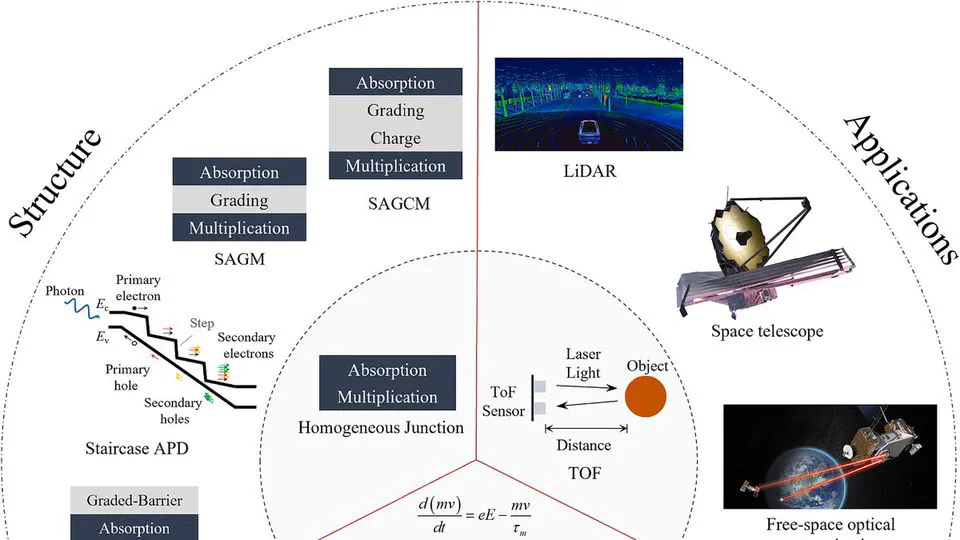
刘书宁 (Shuning Liu) is a PhD candidate in Microelectronics at HKUST(GZ), with a Master’s degree from the Shanghai Institute of Technical Physics, Chinese Academy of Sciences. His research focuses on infrared photodetectors, particularly narrow-bandgap semiconductor avalanche photodiodes (HgCdTe APDs), mesoscopic carrier transport dynamics, and device physics simulation.
He has published multiple papers as first/co-first author in journals including Science China: Physics, Mechanics & Astronomy, Infrared Physics & Technology, and Infrared and Laser Engineering. In 2026, his first-author paper on mesoscopic carrier transport behavior appeared in IEEE Transactions on Electron Devices and his corresponding-author work on electric field sculpting was published in Infrared Physics & Technology. He has also co-authored papers in Nature Photonics, IEEE Journal of Quantum Electronics, Optics Letters, Advanced Optical Materials, and Optics Express, including 2025 co-authored works in Optics Letters and Infrared Physics & Technology.
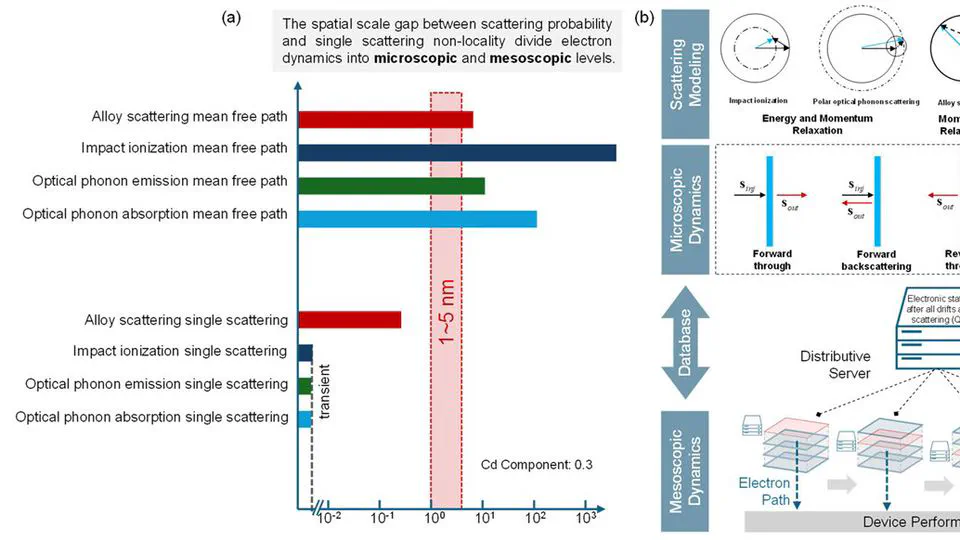
His current work involves developing microscopic-mesoscopic Monte Carlo frameworks for understanding avalanche carrier dynamics and designing ultra-low-noise infrared photodetectors through electric field sculpting strategies.
- Infrared Photodetectors
- Avalanche Photodiodes (APDs)
- HgCdTe (MCT) Devices
- Monte Carlo Device Simulation
- Optoelectronic Logic Devices
- 2D Materials & Heterostructures
-
PhD Microelectronics
HKUST(GZ)
-
MEng Microelectronics and Solid State Electronics
Shanghai Institute of Technical Physics, CAS
-
BSc Materials Science
Shandong University
I am a PhD candidate in Microelectronics at HKUST(GZ), working on next-generation infrared photodetectors. My research centers on understanding and engineering avalanche carrier dynamics in narrow-bandgap semiconductors, particularly HgCdTe, through multi-scale simulation approaches.
I develop microscopic-mesoscopic Monte Carlo frameworks to bridge first-principles carrier scattering with macroscopic device performance. My work aims at designing ultra-low-noise, high-bandwidth infrared avalanche photodiodes through electric field sculpting and mesoscopic dynamics regulation.
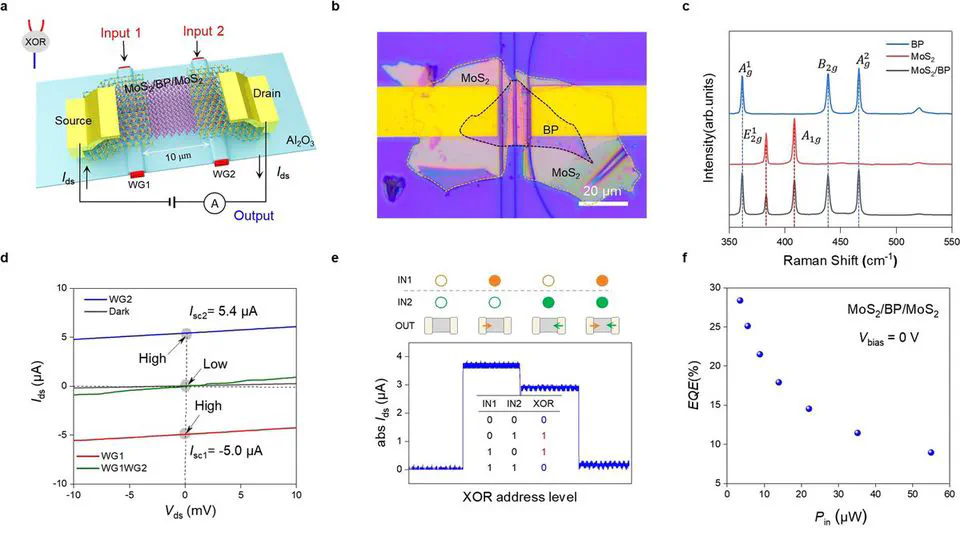
I am also interested in 2D-material-based optoelectronic devices, on-chip optical logic gates, and the intersection of computational physics with experimental device design.
Please reach out to collaborate 😃